Showing posts with label Butterflies. Show all posts

Thursday, 9 July 2020

4th July - A visit to Holkham NNR

Hearing that Holkham NNR had reopened after lockdown I was keen to pay the site a visit. After paying £6 for 4 hours parking at Lady Anne's Drive we began to explore. First thing to do was to check the trunks of the Poplar trees that line the drive in search of Hornet clearwing moths. We found many exit holes which adults had emerged from but no sign of the adults themselves.


Hornet clearwing moth (a superb mimic) stock photo

From the boardwalk we headed down the Western track with butterflies constantly flitting all around us. A good selection was seen. Peacock, Comma, Red admiral, Brown argus, Essex and Small skippers, Meadow brown, Ringlet, Speckled wood, Gatekeeper, Common and Holly blue and Small tortoiseshell were all abundant, while we saw 1 single Purple hairstreak high in an ancient Oak's canopy and 4 Dark-green fritillaries.

Ringlet

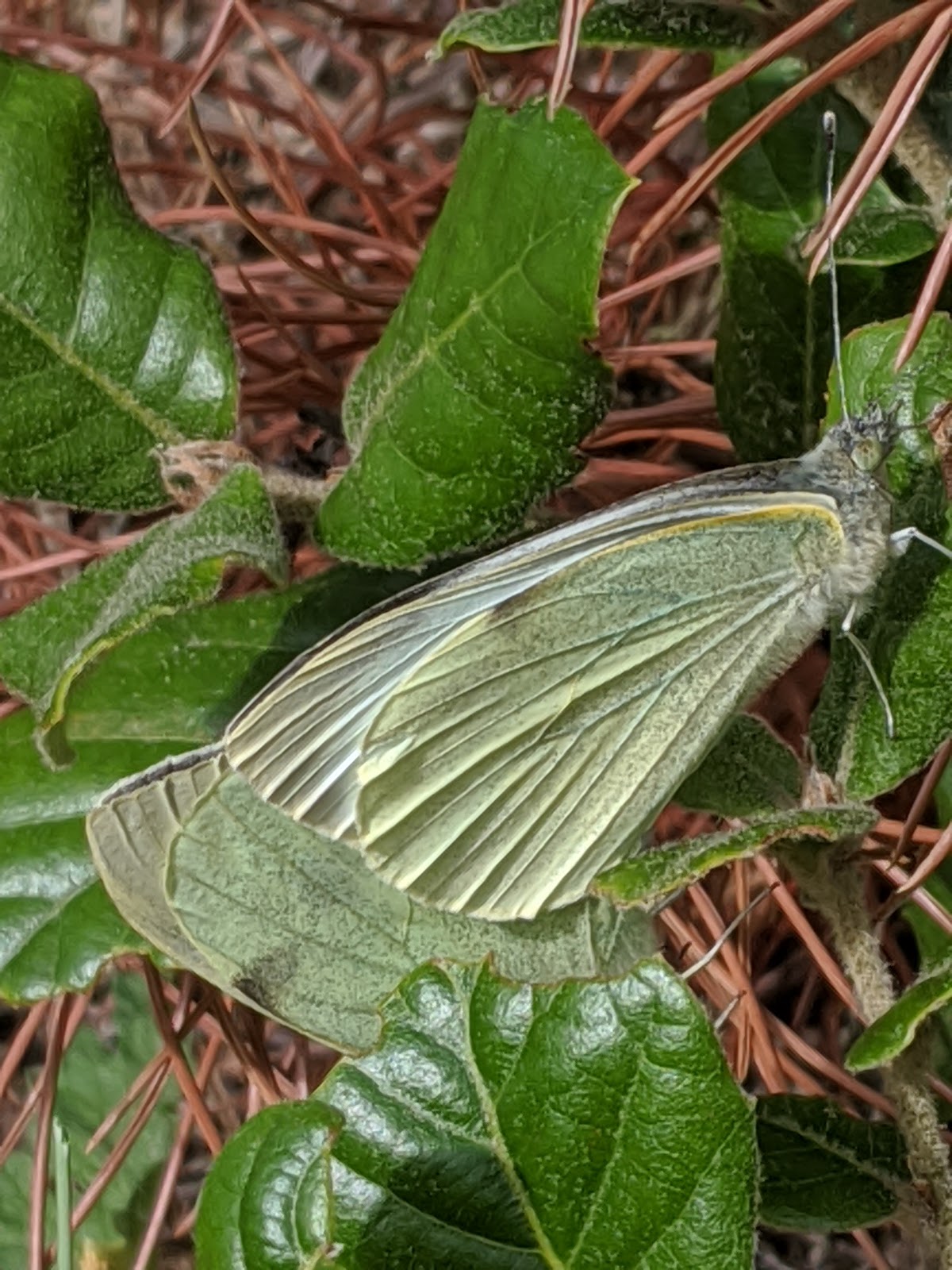
Mating Large whites

Dark green fritillary 

Other highlights in the woods included a spectacular Long-horned beetle and a lovely Mint leaf beetle.

Mint leaf beetle


Cinnabar moth caterpillar

Black and yellow longhorn beetle


Monday, 18 May 2020

14th-17th May - Stuff with wings and crawly things

Recent walks around local lanes have provided me with sightings of some day flying moths and butterflies galore. Also encountered were the caterpillars of two moth species.
Life cycle of a moth (from Lewington's Butterfly guide)

First up is a Drinker moth caterpillar.  The adult moth is a rather drab looking brown affair, while the large caterpillar is a stunning beastie. Drinker moths are so named because of the caterpillar's habit of drinking dew drops.
Drinker moth caterpillar
Close up

Lesser yellow underwing Caterpillar

Cinnabar moths are very distinctive with the gaudy red and black colouring providing a warning to potential predators that they are poisonous.
Cinnarbar moth

The first Wall brown butterfly of the year for me was a welcome sight. A common butterfly in my youth, sadly rare these days.
Wall brown

In recent days I've been delighting in several large gatherings of the green longhorn moth. Watching them dancing in the sunlight has been a real pleasure, the metallic greens and burnished bronzes only visible close up. The females have extremely long antennae (often as long as the rest of the body).
Green longhorn moth

Look at those antennae


Friday, 24 April 2020

22nd April - The first Small copper

A couple of hours spent on the allotment wasn't as productive as it should have been as I spent at least half my time looking at butterflies and birds.  Butterflies that graced the plot included Red admiral, Brimstone, Comma, Holly blue and a lovely Small copper - the first of year for me and one of my personal favourites.
Comma
Holly blue
Small copper

Overhead in a cloudless blue sky a regular stream of raptors provided extra distractions to actual work: Common buzzard, Red kites, Kestrels and a single Sparrowhawk were seen.

A large hatch of St Mark's flies has also occurred over the last few days.  They have a distinctive profile when flying with long legs dangling beneath their black bodies.  They are so called as the adults usually emerge around St Marks day 25th April.
St Mark's fly

Wednesday, 15 April 2020

9th April- The first Swallow

Hello and welcome to Baconsthorpe nature diaries.  The aim of this blog is to inform and hopefully inspire you to observe and listen to the nature living on your doorstep.
     I aim to update the blog every few days, giving you an idea as to what flora and fauna can be seen based on our daily rambles.
     All photos are taken using the camera on my phone, so my subjects will be mainly close targets and landscapes.

Birds of note seen today                 
Swallow (1st of the year)
Sand martin x3
Redwing x6
Buzzard x8
Kestrel
Remains of a Song thrush's lunch

Jay feathers: the remains of a Sparrowhawk kill 

Butterflies seen
Green-veined white (1st of the year)
Holly blue x2
Comma
Peacock
Peacock

Also of note were 3 Roe deer and a Common shrew.

Red deadnettle